What Should I Teach My Child Before Giving Them a Debit Card?




The Digital Allowance Dilemma
Many parents face the conundrum of introducing their children to financial management without the pitfalls of overspending. Handing a debit card to a child might seem like a convenient solution, but without the right preparation, it can quickly lead to financial missteps. The concept of digital allowance is evolving, and with it comes the responsibility to instill financial literacy from an early age.
It's easy to see the appeal: a debit card lets kids manage their money and make purchases independently. However, without a solid understanding of financial principles, this independence might result in unchecked spending and poor financial habits. This is why preparing children with actionable skills before giving them a debit card is critical. Parents must be proactive in teaching the basics of budgeting, purchase tracking, and distinguishing between needs and wants. Neglecting these foundational skills can lead to dangerous spending patterns that are difficult to correct later.
The Missing Lesson: Why Handouts Don't Teach Financial Responsibility
Parents often grapple with how best to instill financial discipline in their children. A common mistake is the reliance on allowances as a substitute for real financial experience. While handing over a set amount of money each week might seem practical, it fails to teach the critical skills needed for managing a debit card. The crucial missing element is the difference between earned income and freely given allowances.
Children who receive a regular allowance without any associated responsibilities may lack the appreciation for the money they spend. It becomes a resource expected periodically, much like a pleasant routine. Conversely, earned income—money obtained through chores, part-time jobs, or educational tasks—imparts the significance of effort. When children invest time and labor into earning their money, they understand its worth, fostering accountability and sensible spending.
Linking Effort to Value: Practical Teaching Strategies
To bridge this gap, parents can start by assigning simpler tasks that attach effort directly to financial reward. Instead of setting a fixed allowance, create a list of household duties paired with specific payments. Additionally, parents might encourage involvement in tasks that simulate real-world job scenarios. This approach provides tangible examples of expense management as children realize the energy needed to earn and the importance of spending wisely.
Real-World Applications and Lifelong Benefits
By emphasizing the connection between labor and reward, parents empower children with the psychological tools needed for effective debit card management. Children learn firsthand the consequences of spending beyond their means when required to earn every dollar. This lesson ensures children are not only prepared to handle their first debit card but also equipped with vital life skills.
Life Hub Infiniti reinforces these concepts by offering a platform where children can complete educational jobs, linking learning with earning. This practical experience makes the principle of earned income relatable and scalable to their everyday digital interactions. When children understand that money is both finite and valuable, their readiness to handle real-world financial responsibilities strengthens, preparing them for a confident future.
Ultimately, fostering a mindset where children appreciate and comprehend the value of money is far more beneficial than merely providing access to funds through an allowance. Parents invested in their children's financial literacy must prioritize teaching earned income over allowance to cultivate independence and accountability.
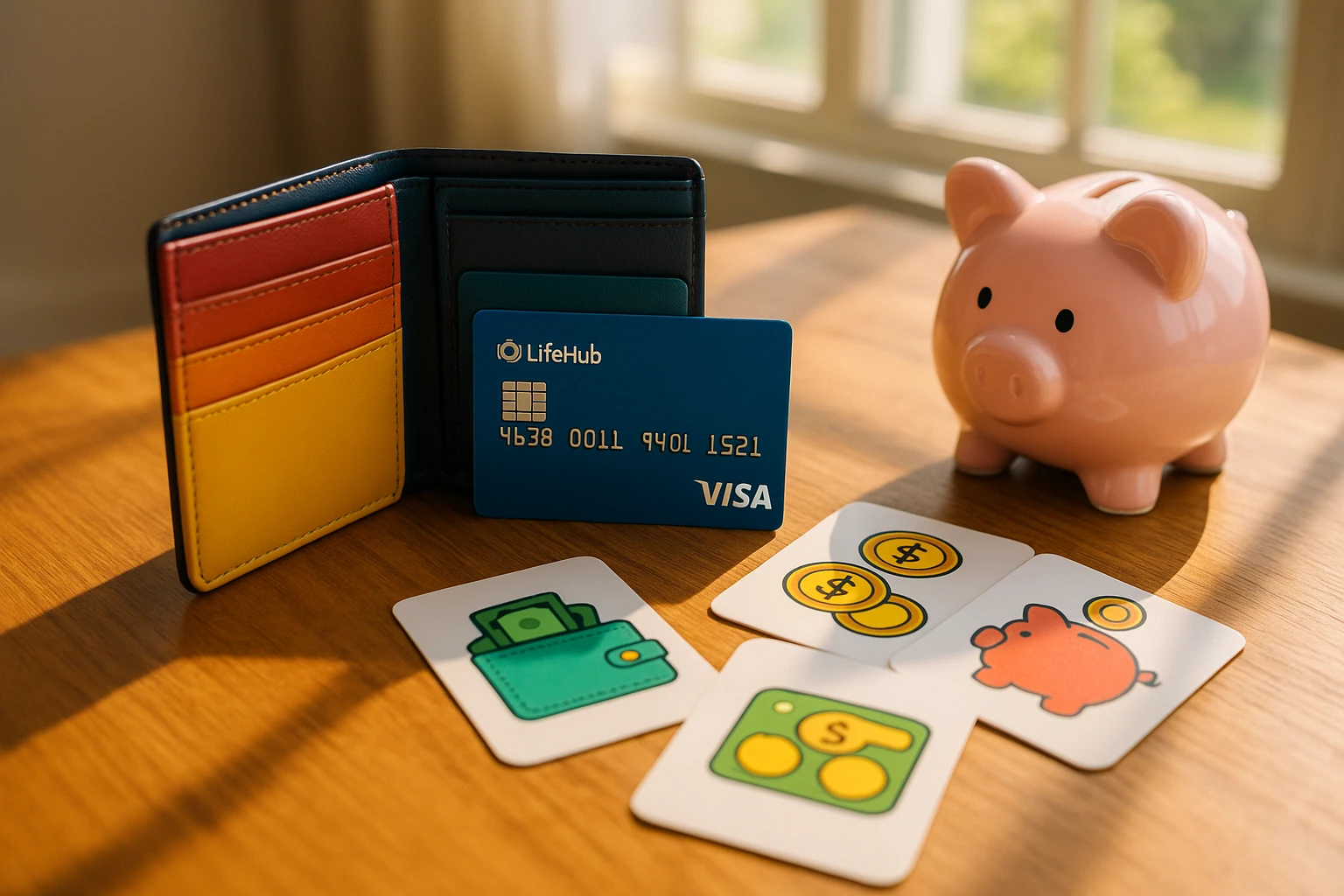
5 Essential Rules Before the First Card
Introducing your child to their first debit card involves a critical educational process. Before embarking on this journey, ensure your child grasps these five essential rules that are pivotal to responsible financial management.
Budgeting Basics and Tracking Expenses
A foundational aspect of financial literacy is learning how to budget. Teach your child to categorize expenses into essentials and non-essentials, allocating a specific portion of their income to each category. Encourage them to maintain a spending diary, whether digitally or on paper, to track expenses systematically. This practice reinforces discipline and provides a clear picture of spending habits over time.
Understanding Security and ATM Safety
Security awareness is vital in today’s digital transactions. Discuss safe practices with your child, such as protecting their PIN, recognizing phishing scams, and using secure networks when online. Emphasize the importance of ATM safety by instructing them to check their surroundings, cover the keypad when typing their PIN, and only use ATMs in reputable, well-lit areas.
Lessons in Delayed Gratification and Spending Wisely
Children should understand the value of delayed gratification. Help them set savings goals for desired purchases, teaching them to prioritize long-term rewards over immediate satisfaction. This practice not only aids in money management but also instills a sense of achievement when goals are met.
Tracking Digital Balances
With modern banking apps, tracking balances has never been easier. Introduce your child to these tools, highlighting features that allow them to track their spending and remaining balance in real time. Understanding how to monitor digital balances helps prevent overdrafts and promotes accountability.
Earning vs. Spending: A Balanced Approach
The balance between earning and spending is a crucial lesson. Encourage your child to engage in tasks that allow them to earn income, providing them with the firsthand experience of what it takes to make money. By teaching them to put money aside not only for spending but also for investing in their learning and future, they develop a holistic viewpoint on finances.
By integrating these financial principles into their routine, children build a secure foundation for managing their first debit card effectively. To further enhance this experience, platforms like Life Hub Infiniti offer excellent resources for teaching these skills in a structured, engaging manner.
Life Hub Infiniti: Empowering Financial Responsibility
Life Hub Infiniti stands out as a comprehensive solution for parents aiming to teach their children financial responsibility. The platform's unique feature, interactive Edu-Jobs, allows kids to earn real income while learning valuable skills. This approach not only provides practical financial education but also instills a strong work ethic.
Interactive Edu-Jobs: Learning Through Earning
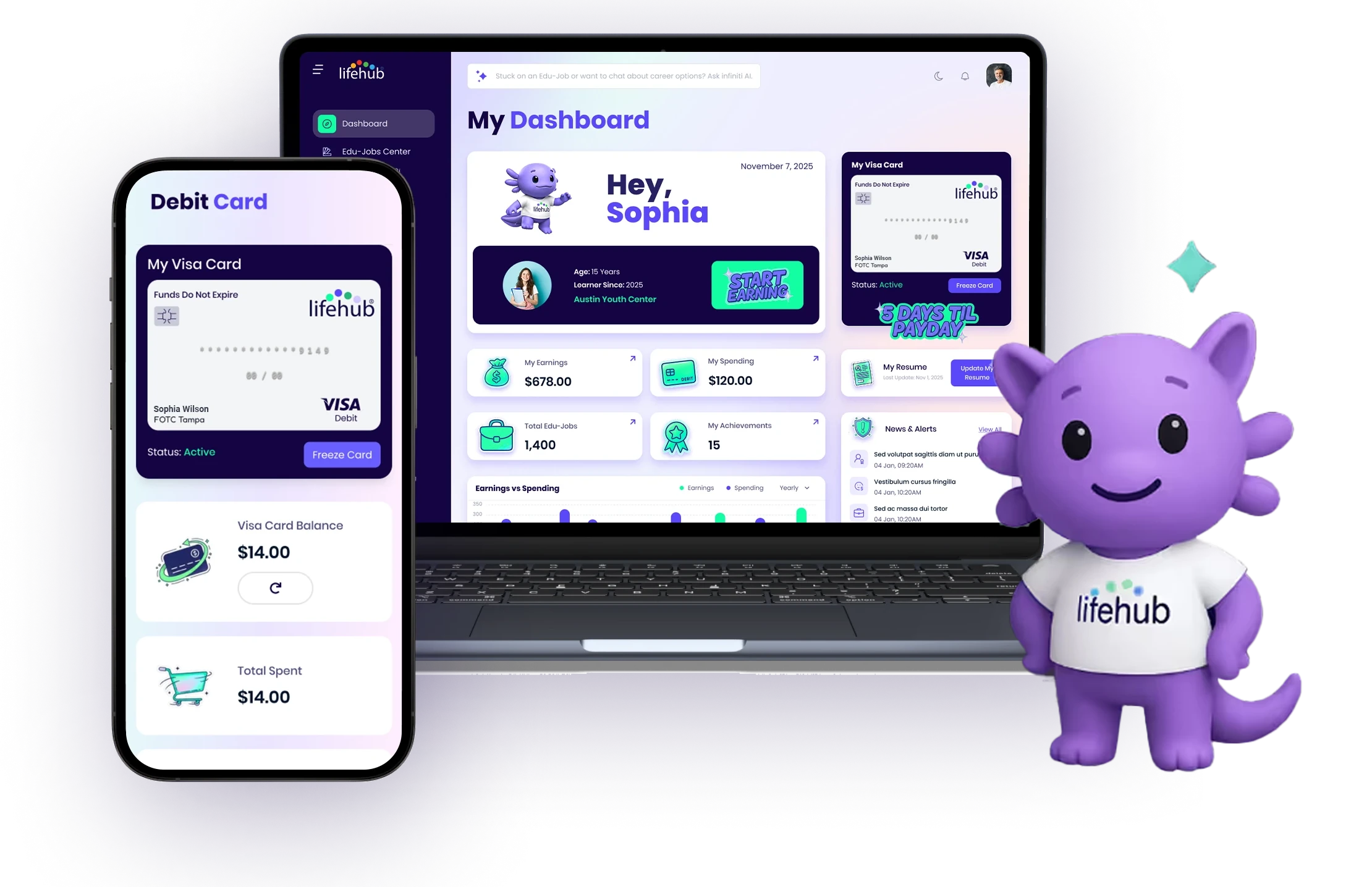
Edu-Jobs blend educational tasks with real-world skills, making financial literacy engaging and effective. Children can select from a variety of tasks aligned with educational standards, including financial literacy, AI, and career development. As they complete these tasks, they earn real income, which is loaded directly onto their Life Hub Visa card. This process teaches them the value of money, connecting effort with reward, a crucial lesson in managing personal finances.
For instance, a child might engage in an educational module about budgeting, where they learn to allocate expenses based on priorities. Successful completion of such a module not only earns them money but reinforces vital budgeting skills. This experiential learning model enhances their ability to apply financial concepts in everyday situations.
Life Hub Visa Card: A Tool for Supervised Financial Management
The Life Hub Visa card is an excellent tool for young users to manage the income they’ve worked hard to earn. Parents maintain control by setting limits and tracking spending through the Life Hub app. This ensures that children learn to make financial decisions within safe boundaries, promoting responsible debit card usage.
This structured approach makes the learning process engaging and ensures financial education is seamlessly integrated into a child’s daily life. With the Life Hub Visa card, students naturally transition from theoretical knowledge to practical application, understanding how to track balances, manage savings, and make informed spending decisions.
Overall, Life Hub Infiniti empowers children with the tools needed for responsible financial management. By connecting education with earning and supervised spending, the platform offers a holistic approach to financial literacy. This methodology is not just about managing money but understanding its value, setting the foundation for a financially secure future.

Conclusion & Call to Action
Empowering your child with the knowledge and skills to manage a debit card responsibly sets a strong foundation for their financial future. By focusing on practical learning experiences, you not only help them grasp essential financial concepts but also reinforce the importance of earning through effort. This approach can significantly enhance their financial literacy and decision-making skills.
Life Hub Infiniti stands as a valuable tool in this journey. By combining educational activities with real-world financial applications through the Life Hub Visa card, Life Hub Infiniti ensures kids not only learn but also implement these vital skills. Engaging in Edu-Jobs, they earn real income, which teaches them the true value of money and responsible spending.
Encouraging your child to transition from passive allowances to active, earned income will foster a sense of accountability and understanding of their financial landscape. Consider integrating Life Hub into your child’s learning experience for comprehensive support in building robust financial habits.
By taking action now, you can provide your child with the tools they need to thrive financially and offer them a head start in their financial education journey. Invest in their future with confidence and see how they transform into informed, responsible decision-makers, ready to face the complex world of personal finance.


Related Content
Ready to Chat about Life Hub?
Whether you're parents, or a homeschool family, Life Hub is your partner to help you
raise super strong kids.

.svg)

.svg)


.svg)
.svg)

.svg)